|
|
Latest Articles

New Movies








Foreign







|

Torrent Description
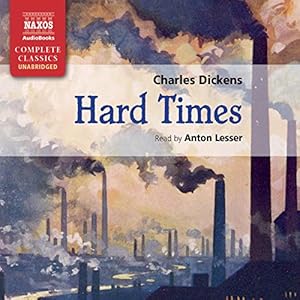 Category: Adults, Classic, Historical Fiction Language: EnglishKeywords: England Industrial Revolution Social Conditions Written by Charles Dickens Read by Anton Lesser Format: MP3 Bitrate: 64 Kbps Unabridged Length: 10:41:28 Publisher: Naxos AudioBooks, 2011 Hard Times is Dickens’s most political novel. Set in the industrial north of England, in the fictional Coketown, he examines the lives of working people, who are taught by the capitalists Gradgrind and Bounderby to think only of the facts of life and not to indulge in imagination. Gradgrind’s own children have been educated thus, and as a result are dysfunctional and disconnected from their feelings. Only Sleary’s traveling circus company seems to offer any hope of humanity in Coketown. Hard Times is a deeply moving story written in anger to strike a blow for the victims of the dehumanizing processes of industry. From a Critics Review from the Naxos site—-Dickens had no intention of writing another novel in 1854. Exhausted after completing Bleak House in August 1853, he had intended to have a holiday from the pressures of writing, but an appeal from his publishers, Bradbury and Evans, changed his plans. In collaboration with them, Dickens had produced a weekly magazine called Household Words, for which he had briefly edited and contributed articles; however, in 1854 it was having financial difficulties. The publishers asked Dickens if he would reverse the falling sales by contributing a new novel in weekly parts. Despite his exhaustion Dickens agreed and the result was Hard Times. Dickens is firmly on his soap-box in Hard Times, didactic at the expense, sometimes, of his usual writing-style: he suppresses his naturally extrovert mode in favour of a repressed, subdued tone. It gives the novel a powerful sense of oppression. His customary humour is grim in Hard Times. There is little of it and the tone is harsh. It has led some critics to consider Hard Times as more of a political tract than a novel. Dickens dedicated Hard Times to Thomas Carlyle, the leading philosopher of his age, whom he once said was the man ‘who had influenced him the most’. In his pamphlet on Chartism, Carlyle had set out the rights of the working-class man, with which Dickens agreed wholeheartedly. However, Dickens’s politics were for the most part dictated by his sentimentality and sense of romance rather than sound principles. Hard Times was not to be a realistic social document but, true to the main theme of the novel, a work of his imagination. He ultimately shows a humane solution to the situation in Hard Times, rather than a political one. …. Length: 10:41:28 Publisher: Naxos AudioBooks, 2011 Hard Times is Dickens’s most political novel. Set in the industrial north of England, in the fictional Coketown, he examines the lives of working people, who are taught by the capitalists Gradgrind and Bounderby to think only of the facts of life and not to indulge in imagination. Gradgrind’s own children have been educated thus, and as a result are dysfunctional and disconnected from their feelings. Only Sleary’s traveling circus company seems to offer any hope of humanity in Coketown. Hard Times is a deeply moving story written in anger to strike a blow for the victims of the dehumanizing processes of industry. From a Critics Review from the Naxos site—-Dickens had no intention of writing another novel in 1854. Exhausted after completing Bleak House in August 1853, he had intended to have a holiday from the pressures of writing, but an appeal from his publishers, Bradbury and Evans, changed his plans. In collaboration with them, Dickens had produced a weekly magazine called Household Words, for which he had briefly edited and contributed articles; however, in 1854 it was having financial difficulties. The publishers asked Dickens if he would reverse the falling sales by contributing a new novel in weekly parts. Despite his exhaustion Dickens agreed and the result was Hard Times. Dickens is firmly on his soap-box in Hard Times, didactic at the expense, sometimes, of his usual writing-style: he suppresses his naturally extrovert mode in favour of a repressed, subdued tone. It gives the novel a powerful sense of oppression. His customary humour is grim in Hard Times. There is little of it and the tone is harsh. It has led some critics to consider Hard Times as more of a political tract than a novel. Dickens dedicated Hard Times to Thomas Carlyle, the leading philosopher of his age, whom he once said was the man ‘who had influenced him the most’. In his pamphlet on Chartism, Carlyle had set out the rights of the working-class man, with which Dickens agreed wholeheartedly. However, Dickens’s politics were for the most part dictated by his sentimentality and sense of romance rather than sound principles. Hard Times was not to be a realistic social document but, true to the main theme of the novel, a work of his imagination. He ultimately shows a humane solution to the situation in Hard Times, rather than a political one. ….
Related Torrents
|
|||||||||||||||||||||||||||||||||||||||||||||||||||||||||||||||||||||||||



Home - Browse Torrents
ExtraTorrent.st is in compliance with copyrights
2025 ExtraTorrent.st