|
|
Latest Articles

New Movies







Foreign







|

Torrent Description
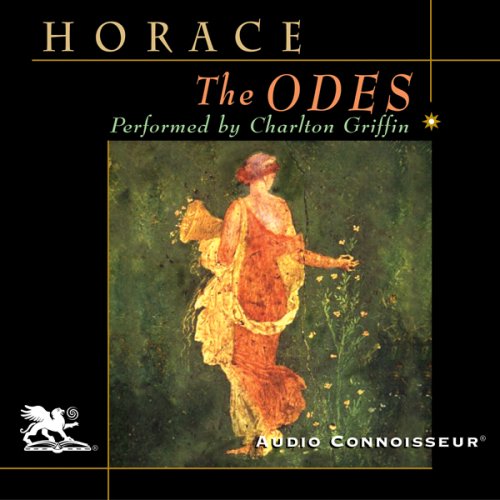 Category: Other Language: English Keywords: Non-fiction Poetry Philosophy Literature Written by Catullus, Horace, and Virgil Read by Charlton Griffin Format: MP3 Bitrate: 64 Kbps Unabridged The Odes of Horace (UNABRIDGED) by Horace Narrated by Charlton Griffin LENGTH: 4 hrs and 18 mins AUDIBLE RELEASE DATE: 11-13-07 PUBLISHER: Audio Connoisseur Publisher’s Summary Along with Virgil, Horace (Quintus Horatius Flaccus) was the greatest poet produced by Rome, and in many ways his work has had arguably an even greater impact. He and Virgil were both discovered and brought to the court of Augustus by that remarkable aristocrat and patron of letters, Maecenas. But there the similarities end. Virgil was an epic and didactic poet; Horace was a lyric poet who adapted the complex meters of Greek poetry to the needs of Latin. His brilliant expression and astonishing acumen continue to amaze readers today, either in their original Latin or in innumerable worldwide translations. Shakespeare’s debt to Horace is incalculable, and it is difficult to read his Sonnets today without immediately being reminded of the famous Odes. Horace, born in 65 B.C. in the southeastern region of Hellenized Italy, was the son of a freedman of modest means. In the civil war between Antony and Octavian, he threw in his lot with Antony and fled along with the rest upon their defeat at Phillipi in 42 B.C. His subsequent discovery by Maecenas and eventual rehabilitation with the Augustan regime was one of history’s most fortunate reconciliations. The works of Horace include the Odes, Epodes, Satires, Epistles, and various other fragments and hymns. His gentle nature and free-flowing mind produced some of the world’s supremely great poetry, and his legacy to Latin letters is assured for as long as civilization itself remains. Horace died in 8 B.C., just a few short weeks after his beloved patron, Maecenas. © and (P)2007 Audio Connoisseur __________ Catullus: The Complete Poems (UNABRIDGED) by Catullus Narrated by Charlton Griffin LENGTH: 3 hrs and 3 mins AUDIBLE RELEASE DATE: 04-19-10 PUBLISHER: Audio Connoisseur Publisher’s Summary Acerbic wit and stinging satire are contrasted with delicate sensibility and passionate desire in the work of the Latin poet Catullus. Armed with an urbane sophistication and an aristocratic circle of friends, Catullus moved about easily in the upper ranks of Roman society and was acquainted with Cicero, Caesar, and Pompey among others. His poems describe the lifestyle prevalent among his circle in the middle of the first century B.C. But it is his description of his love affair with a married woman he calls “Lesbia” which is the basis of his fame. His influence on later Latin poets and Renaissance writers was immense. Public Domain (P)2010 Audio Connoisseur ________ The Georgics (UNABRIDGED) by Virgil Narrated by Charlton Griffin LENGTH: 3 hrs and 19 mins AUDIBLE RELEASE DATE: 05-21-07 PUBLISHER: Audio Connoisseur Publisher’s Summary Virgil’s Georgics ranks as one of the most precious pastoral poems ever written, and it has served as a model for its type ever since. Georgics means “of or relating to agriculture or rural life” and it comes from the Greek word “georgicus”. Virgil’s main theme in this, his second great work after The Eclogues, was the importance of peace both in the spiritual and physical sense. One arrives at this peace through embracing the hard life of the farmer and also coming to an understanding of one’s place in the universe. Virgil used the Greek poet Hesiod as his guide for describing why the cheerful acceptance of laboring on a farm was salutary. (Hesiod’s Works and Days is an attempt by the poet to explain to an estranged brother why his work on the family farm would make him a better person.) As for an understanding of one’s place in the universe, Virgil used as his model the Epicurean philosophy in the poetry of his fellow Roman, Lucretius. But although Virgil absorbed the incredible poetry of both Hesiod and Lucretius, he did not copy them. His work is entirely his own. The Georgics is an amazing synthesis of the scientific and the spiritual, which continues to amaze us to this day. This great poem is organized into four parts, or books. Its ostensible subject is farming and the correct seasons for the various chores of the farmer: the cultivation of vines and the planting of trees, farm animals and their diseases, and, finally, how to care for bees. Though Virgil claims that his aim is to teach, the real result is to inspire us with the genius of his poetic ability. © and (P)2007 Audio Connoisseur What the Critics Say “The best poem of the best poet.” (John Dryden) “The most accomplished work of poetry.” (Michel de Montaigne)
|


 English
Home - Browse Torrents
ExtraTorrent.st is in compliance with copyrights
2025 ExtraTorrent.st