|
|
Latest Articles

New Movies








Foreign







|
![Download Trio Mediaeval & Arve Henriksen - Rimur (2017) [FLAC] {dtromp} torrent](/images/download_normal.gif)
Torrent Description
Title: RÍMUR Released: 03.03.2017 Duration: 50:53 Genre: Classical, Nordic Folk Recorded February 2016 Himmerlfahrtskirche, München Tonmeister: Peter Laenger Cover Photo: Jan Cricke Liner Photos: Oddleiv Apneseth (p.5), Asa Maria Mikkelsen (9), Havard Lotsberg (23), Ana Maria Friman (14/15, 26) Design: Sascha Kleiss Produced by Manfred Eicher Label: ECM (2520) un album remarquable trio vocal de haut vol captation splendide et la superbe trompette de Arve Henriksen . frissons garantis ---- ***Commentaries BACKGROUND and PRESS REACTIONS from https://www.ecmrecords.com/catalogue/1484216544: BACKGROUND With their seventh album, the scope of Trio Mediaeval’s music continues to expand. Previous ECM New Series releases have focussed on aspects of early music, particularly sacred monophonic and polyphonic medieval music, as well as the trio’s strong relationships with contemporary composers. In parallel, the trio has also investigated the world of traditional folk songs. Now Rímur emphasises the group’s interest in improvisation, in a collaboration with trumpeter Arve Henriksen, which also explores music from diverse Northern sources. As Anna Maria Friman indicates in her liner note, improvisation has long been a significant component of Nordic musical tradition, and Trio Mediaeval has embraced it with enthusiasm. “Over the last ten years we have been fortunate to be involved in new collaborative projects with Norwegian jazz musicians and improvisers, and the inspiration and creativity that these musicians brought to the music and to the group have been hugely significant for us.” The trio has worked with Tord Gustavsen, Trygve Seim, Nils Økland, Mats Eilertsen, and many others. Arve Henriksen has often performed with Trio Mediaeval in live settings (and the singers and trumpeter appear together on Sinikka Langeland’s recent recording The Magical Forest) but Rímur is their first extensive collaboration on disc. The roots of the present project go back to 2007 when Trio Mediaeval and Arve Henriksen took part in a ceremony in Dalksfjorden on Norway’s west coast celebrating connections between the village of Rivedal and the Icelandic capital of Reykyavík, founded by Norse settler Ingólfr Arnarson. Over several summers Trio Mediaeval and Arve Henriksen spent many days together in Dalsfjorden, and it was there that most of the music for this recording was born. Fascinated and inspired by Icelandic sagas, chants, folk songs, religious hymns and fiddle tunes, the four musicians have arranged a unique set of songs where improvisation, mediaeval and traditional music – from Iceland, Norway, Sweden and the Orkney islands – meet the present. Something new is created from the integration of Henriksen’s liquid trumpet sound into the Trio Mediaeval’s subtle blending of voices. “In this recording,” writes Anna Maria Friman, “we celebrate three saints with their famous medieval hymns: the monophonic chants of St. Sunniva of Norway, St. Birgitta of Sweden and a two-voice hymn of St. Magnus of Orkney. It’s hard for us to imagine now, but until quite late in the medieval period relatively little sacred polyphony was heard at all. Monophonic chant was the rock on which almost all musical experience was founded. In this context, even music composed for just two voices would have made a very special impression. The 17th century Icelandic Tvísöngur were originally two-part songs rather like the kind of improvised parallel organum known all over medieval Europe. Rímur, songs in the unique Icelandic tradition of rhyming narrative verse, were originally performed by kvæðamenn (male or female chanters) who went from farmstead to farmstead and were offered hospitality when reciting an evening wake. Like most of the Scandinavian folk songs the Rímur have been orally transmitted for centuries. Later in the twentieth century ethnographers and folk song collectors began to record these wonderful songs and tunes, and a vast number of melodies have been transcribed and preserved for future generations of singers and listeners.” Trio Mediaeval and Arve Henriksen will be performing music from Rímur in the UK at the Howard Assembly room in Leeds on March 8, Kings Place London on March 9, and St George’s Church, Bristol on March 10. On March 11 they play Oslo’s Svenska Margaretakyrkan. For further upcoming Trio Mediaeval dates, visit www.ecmrecords.com and www.triomediaeval.no * Trio Mediaeval was founded in Oslo in 1997. Its original members were Anna Maria Friman, Linn Andrea Fuglseth, and Torunn Østrem Ossum. When Torunn left the group at the end of 2013, she was replaced by Berit Opheim, who had been singing regularly with the ensemble since 2010. The first album with the revised line-up was Aquilonis, released in 2014. Arve Henriksen has appeared on many ECM albums over the last two decades, beginning with the 1996 recording No Birch with the Christian Wallumrød Trio. He was recently featured in the Atmosphères quartet with Tigran Hamasyan, Evind Aarset and Jan Bang. Sampled voices of The Trio Mediaeval were incorporated into Henriksen’s Cartography (recorded 2005-2008), an album on which Anna Maria Friman also makes a guest appearance. Rímur was recorded in February 2016 at Munich’s Himmelfahrtskirche, and produced by Manfred Eicher. CD booklet includes all song texts with English translations, and a performer’s note by Anna Maria Friman. PRESS REACTIONS This is a beautiful recording that may will bring Trio Mediaeval to a new and wider audience in much the same way that the Hilliard Ensemble did with their collaboration with Jan Garbarek that lasted for twenty years and produced three albums. And that is maybe where the appeal in this extraordinary music lies. In this instance the blending of the three female voices along with the fourth voice of Henriksen's liquid trumpet playing running through it to seamlessly create a fabric of sound that it at once fragile and yet has a tensile strength. The voices have soft yet focussed delivery with precise diction and pronunciation given as much prominence as the subtle harmonies and varying dynamics employed by the trio, yet flexible enough in the arrangement and performance to allow for Henriksen's unique sound elicited from the trumpet, often with the mouthpiece removed and sounding not unlike the Japanese shakuhachi, to float in and around the voices. Nick Lea, Jazz Views Auf einfühlsame Weise gehen das Mediaeval Trio und Arve Henriksen den verschlungenen Verbindungslinien zwischen isländischen und skandinavischen Liedtraditionen nach. Vielfältig ist das Repertoire: Es stammt aus der Zeit zwischen dem 13. und 17. Jahrhundert und reicht von isländischen Hymnen und Volksliedern über norwegische Sakralgesänge bis hin zu schwedischen Traditionals. Wobei sich das Mediaeval Trio und Arve Henriksen erst gar nicht lange bei Fragen der historischen Aufführungspraxis aufhalten. Sie interpretieren das Material auf ihre ganz eigene Weise, Traditionelles mit Intuitivem, Überliefertes mit Hochpersönlichem verbindend. Das Mediaeval Trio feiert die ursprünglich monodischen Hymnen und Songs in neuen mehrstimmigen Sätzen, die Anna Maria Friman ebenso respektvoll wie eigenwillig arrangiert hat. Toll sind auch die kleineren improvisatorischen Passagen, mit denen das Trio Mediaeval den spontanen Ideen Arve Henriksen Paroli bietet. […] ‚Rímur‘ ist ein Meisterwerk gegenseitiger Einfühlung. Günther Huesmann, Südwestrundfunk Schon immer gehörte Improvisation zur jahrhundertealten mündlichen Überlieferung dieser nordischen Gesänge. Und das Trio Mediaeval hat hier in den vergangenen Jahren Erfahrungen mit verschiedenen Jazz-Größen aus Skandinavien sammeln können. Auf ihrer neuen CD setzen die Sängerinnen auf eine zurückhaltende Instrumentierung, etwa mit der Hardanger-Fidel von Sängerin und Arrangeurin Anna Maria Friman. Oder mit der Trompete des norwegischen Jazzmusikers Arve Henriksen, der zuvor oft live mit dem Trio aufgetreten war. Sehr behutsam gesellen sich seine sanften Trompetenklänge zum lichten Gesang, wie in einem berühmten einstimmigen Hymnus auf den Heiligen St. Sunniva von Norwegen. Es ist eine Musik aus ferner Vergangenheit, archaisch entrückt und doch seltsam vertraut. Und berührend durch die schwebende Schwerelosigkeit, mit der das schwedisch-norwegische Ensemble seinen lupenreinen, tröstlich-schönen Gesang zelebriert. Susanne Schmerda, Bayerischer Rundfunk Die Vokalistinnen Anna Maria Friman, Linn Andrea Fuglseth und Berit Opheim des Trio Mediaeval und der Trompeter Arve Henriksen begegnen sich in ihrer kaum zu überbietenden Präzision, Klarheit und geschmackssicheren Kultiviertheit auf gleicher, nämlich schwindelerregender Höhe und verströmen eine fast schon magisch wirkende Atmosphäre zeitloser Schönheit. Es ist faszinierend, mit welcher Subtilität sich Stimmen und Blasinstrument umgarnen, aneinanderschmiegen, spiegeln, kontrastieren oder verschmelzen – ganz, wie es der jeweils gewünschten Stimmung gerade zuträglich ist. Und manchmal wird das Klangspektrum zusätzlich durch die von Friman gespielte Hardanger Fiddle um archaisch anmutende Töne erweitert. Peter Füssl, Kultur Frauen und Männer zogen einst über die Berge und Ebenen Islands von Gehöft zu Gehöft, um gegen Kost und Logis abends Rímur zu singen, epische Gedichte mit bis zu 40 bis 50 vierzeiligen Strophen. Das norwegische Damen-Vokaltrio Mediaeval hat für sein neues Album ‚Rímur‘ traditionelle Lieder und sakrale Gesänge aus dem Mittelalter ausgewählt, um sie gemeinsam mit dem Trompeter Arve Henriksen auf ihre unverwechselbare Art neu zu interpretieren. Stimmiger, behutsamer lassen sich nicht Brücken über die Zeiten spannen. Miriam Jessa, ORF 1 ***Tracklisting: 01. ST BIRGITTA HYMN - ROSA RORANS BONITATEM 04:23 02. O JESU DULCISSIME 05:05 03. OM ÖDET SKULLE SKICKA MIG 01:19 04. MORGUNSTJARNA 03:07 05. RÍS UPP, DROTTNI DÝRÐ 01:06 06. ST MAGNUS HYMN - NOBILIS HUMILIS 04:24 07. LÁTA GJALLA LÉTT OG HÁTT 02:38 08. BRURESLÅTT 03:15 09. ST SUNNIVA HYMN - ETERNA CHRISTI MUNERA 03:56 10. KRUMMI 02:25 11. ANDA ÞINN GUÐ MÉR GEF ÞÚ VIST 03:29 12. SULLA LULLA 02:16 13. DU ÄR DEN FÖRSTA 04:06 14. ALMA REDEMPTORIS MATER 02:40 15. BÍUM BÍUM BAMBALÓ 02:23 16. JAG HAVER INGEN KÄRARE 02:11 17. GAMMELKJERRINGVALSEN 02:10 ***Musicians: Trio Mediaeval Anna Maria Friman: Voice, Hardanger Fiddle Linn Andrea Fuglseth: Voice, Shruti Box Berit Opheim: Voice Arve Henriksen: Trumpet ***Review from https://www.allaboutjazz.com/rimur-trio-mediaeval-ecm-records-review-by-henning-bolte.php: Trio Mediaeval & Arve Henriksen: Rímur Henning Bolte By HENNING BOLTE 4,5 stars out 5 March 1, 2017 Rímur is a collection of seventeen chants, hymns, folk songs and improvisations based on ancient Icelandic, Norwegian and Swedish sources, brought into our contemporary way of sensing by singer/violinist Anna Maria Friman , singers Linn Andrea Fuglseth and Berit Opheim, and eminent trumpeter Arve Henriksen. The music of this album is a clear example of the deep-rooted migrational nature of our local existence. It is music of a remote past, marked by radically different life conditions. It is music from distant areas connected by wandering people in search of better life conditions. It is music handed down by word of mouth for a long time and finally documented in written form during the last century. It is music to be recovered, reconstructed and re-contextualized in an ongoing process of searching, appropriating and re-inventing, of sense making at the intersection of a resonating past and today's breathing. Starting point and place of inspiration was the village of Rivedal in the municipality of Askvoll, near the mouth of the Dalsfjord to the Northern Atlantic. The Dalsfjord is situated about 110 km northwest of the city of Bergen in between the Sognefjord and the Nordfjord. Arve Henriksen grew up not too far from this place, namely in Stryn in the Nordfjord area some 180 km northeast of Askvoll. In the 9th century Ingolfur Arnarson, a guy from Rivedal, initiated the settlement of Iceland. Iceland is situated 1400 km westwards of Rivedal in the Northern Atlantic between the Faeröer Islands and Greenland. Ingolfur Arnarson became entangled in a blood feud in 874. After having lost his possessions he decided to set sail together with two relatives, in search of a reported new island in the middle of the Northern Atlantic. Eventually he founded Reykjavik, now the capital of Iceland. This all happened more than a thousand years ago (as reported in the medieval Icelandic Landnámabók manuscript). The Dalsfjorden area with its migration history was the musician's place of inspiration to connect ancient songs and singing of Northern areas including Iceland, the Orkney Islands, Norwegian and Swedish regions. The result is a sequence of medieval hymns, Icelandic Tvisöngur, Ríma, Folk Songs, Shanties and newly invented pieces in the spirit of the ancient forms. Impressive from the first moment of listening is the strength, calmness and concentration this originally monophonic music exudes. Some may need more time to really get into it but it offers the listener to opportunity to feel the deeper ground of existence the music is touching upon. As Anna Friman states in her liner notes: "It's hard for us to imagine now, but until quite late in the medieval period relatively little sacred polyphony was heard at all (either in church or elsewhere). Monophonic chant was the rock on which almost all musical experience was founded." The opener, the Swedish "St. Birgitta Hymn," starts with a lead voice soon after joined by two backing vocals and, hardly discernible, a kind of trumpet drone. Then the three female voices melt into one voice contrasted by the rising sound of the trumpet taking the lead with embellishing lines. These constant subtle dynamic changes and transitions, the almost imperceptible use of foregrounding and background, the slight ways of zooming in and out, the mirroring and distancing are a central mark of the album. It convokes an atmosphere that gives wings to the listener's imagination. In "O Jesu dulcissime," one of the four Icelandic Tvisöngur, Anna Freeman's curving Hardanger fiddle merges with Henriksen's trumpet thereby mingling with the two voices of Fuglseth and Opheim in airy ways. Further on Hardanger fiddle and trumpet constantly intertwine and diverge in their interplay with the two voices. Thus the 'voices from far away' are carried through the air thereby gaining visceral closeness in the moment of listening. These are always 'small effects' with a large impact on the listening landscape presented. In 'Morguntjarna,' another Icelandic Tvisöngur, Henriksen's trumpet functions as a shadow of the voices rising to the foreground only in a few moments. The richest orchestrated Tvisöngur is "Anda þinn guð mér gef þú vist." It starts with the three female voices from which the trumpet emerges with a longer jubilating solo backed by the murmuring voices—a timeless vocal manifestation. The most southwestern source is the "St. Magnus Hymn" from the Orkney archipelago situated off the north coast of Scotland. It was (invaded and) settled by the Norse around the same time that Ingolf Arnarson set foot on Iceland. According to the Orkneyinga Saga Orkney was Christianized 100 years later by Norwegian king Olav Tryggvasson in 995. There was a centuries long Norse presence on Orkney, which makes it reasonable for this hymn to be part of the collection of Rímur. The hymn is introduced by the trumpet and after a while is joined by a repetitive echoing of the three female voices. Later the lead voice takes over and unites with the other two voices. The trumpet returns shortly before the voices turn to soft humming and fade away. Not only the arrangement of the four voices is remarkable here. The sequencing and repetition of parts of the song with a humming conclusion is sophisticated too. We don't know how 'the original' sounded, but here it sounds intuitively 'right.' There is a lot more of that on the album. It makes it a worthwhile and so far unique aural journey. After all, it is the first album of this combination of musicians, a combination that has proved itself already in other contexts as a golden choice, especially in its already longer lasting collaboration with eminent Norwegian singer/kantele player Sinikka Langeland on The Magical Forest(2016, ECM). Another one is Trio Mediæval's recent pairing with the trio of Norwegian bassist Mats Eilertsen comprising pianist Harmen Fraanje and drummer Thomas Strønen in the stunning "Memorabilia," a work commissioned by and premiered at the Trondheim Jazz Fest last year and touring presently. The latest one is the Saumur + Rímur constellation. Here the Saumur trio of Icelandic musicians Skuli Sverrisson (bass) and Hilmar Jensson (guitar) together with Arve Henriksen meets Trio Mediaeval with Arve Henriksen as connecting link between both trios. And meanwhile the trio also left its mark in present pop music: Trio Mediæval's rendition of "just" (after Song of Songs) is sampled in the intro and outro of the piece "Lips" on The XX's just released album I See You. Worth mentioning is that the brilliant and touching sound of Arve Henriksen here did not just fall from the sky one day, as a divine boon. Henriksen is a musician with many sides, who has explored and developed his playing in a long and deep sonic journey. It is remarkable how seemingly heterogeneous spheres are unified on Rímur including natural transitions between mundane Folk Songs and Sacred Music. Track Listing: St Birgitta Hymn – Rosa rorans bonitatem; O Jesu dulcissime; Om ödet skulle skicka mig; Morgunstjarna; Rís upp, drottni dyrð; St Magbnus Hymn – Nobilis humilis; Lata gjálla létt og hátt; Brureslått; St Sunniva Hymn – Eterna Christi munera; Krummi; Anda þinn guð mér gef þú vist ; Sulla lulla; Du är den första; Alma Rerdemptoris; Bíum bíum bambaló; Ja haver ingen kärare; Gammelkjerrringsvalsen. Personnel: Anna Maria Friman: voice, Hardanger Fiddle; Linn Andrea Fuglseth: voice, Shruti Box; Berit Opheim: voice; Arve Henriksen: Trumpet, electronics. Title: Rímur | Year Released: 2017 | Record Label: ECM Records ***Review from https://www.allaboutjazz.com/rimur-trio-mediaeval-ecm-records-review-by-mark-sullivan.php: Trio Mediaeval & Arve Henriksen: Rímur By MARK SULLIVAN 4,5 stars out 5 May 15, 2017 Rímur are songs in the unique Icelandic tradition of rhyming narrative verse. Transmitted orally for centuries, in the twentieth century they were recorded and transcribed by ethnographers and folk song collectors. They form part of the inspiration for this music, along with chants, folk songs, religious hymns, and fiddle tunes. There's also an emphasis on improvisation, in collaboration with trumpeter Arve Henriksen. While the Norwegian singers and trumpeter have often performed together in live settings, their only previous recording was on Sinikka Langeland's recent album The Magical Forest. I have seen Rímur identified as part of the ECM New Series of classical music recordings in some places. The usual labeling is missing from the cover, but the content could have gone either way. The source music in this collection began as either monophony (single voice) or two-voice polyphony. As Anna Maria Friman points out in her liner notes, polyphony was rarely heard until late in the medieval period: multi-voice polyphony became one of the defining features of Renaissance music, culminating in works like Thomas Tallis' 40-part motet "Spem in alium." So, in the historical context, even two-voice compositions would have made a special impression. Much of the Trio's improvisation may have involved the creation of three-part vocal harmonies for music created for one or two voices. Henriksen's role is more obviously improvisational—taking an obbligato role—but as the collective developed many of these arrangements together, it seems clear that he is not just winging it. Opener "St. Birgitta Hymn—Rosa rorans bonitatem" (the only piece here with a known composer, Nils Hermansson) presents the three vocalists singing the hymn, then vocalizing behind Henriksen's distinctive, reedy trumpet. It's a sound that seems perfectly matched to the human voice, as if this was always the setting it was destined for. "O Jesu ducissime" (from the Icelandic Tvísöngur C17 collection, also the source of some other selections) features Friman's Hardanger fiddle playing in an active role, far more than just a simple drone. Linn Andrea Fuglseth also plays the shruti box on some pieces, a simple reed organ with a bellows that has traditionally been used as a drone instrument in classical Indian raga performance. "Krummi" is the only track without a traditional basis: it's credited to Friman and Henriksen. There are multiple voices, but the sound fits right in with the rest of the program. "Du är den första" (a traditional Swedish shanty) again features the fiddle, along with a trumpet solo. I believe this is the only selection with trumpet where Henriksen does not get co-arranger credit. The album ends with the lovely pure sound of the trio singing a cappella on the chant "Alma Redemptoris Mater," followed by three folk songs: "Bíum bíum bambaló" (from Iceland); "Jag haver ingen kärare" (from Sweden); and "Gammelkjerringvalsen" (from Norway). A beautiful ending to an exceptionally lovely collection of music, even by ECM standards. Track Listing: St Birgitta Hymn – Rosa rorans bonitatem; O Jesu dulcissime; Om ödet skulle skicka mig; Morgunstjarna; Rís upp, drottni dyrð; St Magbnus Hymn – Nobilis humilis; Lata gjálla létt og hátt; Brureslått; St Sunniva Hymn – Eterna Christi munera; Krummi; Anda þinn guð mér gef þú vist ; Sulla lulla; Du är den första; Alma Rerdemptoris; Bíum bíum bambaló; Ja haver ingen kärare; Gammelkjerrringsvalsen. Personnel: Anna Maria Friman: voice, Hardanger Fiddle; Linn Andrea Fuglseth: voice, Shruti Box; Berit Opheim: voice; Arve Henriksen: Trumpet, electronics. Title: Rímur | Year Released: 2017 | Record Label: ECM Records ***Review from http://www.allmusic.com/album/r%C3%ADmur-mw0003017390: AllMusic Review by James Manheim 3,5 stars out 5 Is this ECM release an exploration of early Scandinavian repertories? A showcase for the chillingly beautiful harmonies of the all-female Trio Mediaeval? An investigation into the nature of early polyphony? Of the relationship between chant and folk music? Of the possible meeting points of jazz and medieval music? It is all those things, yet even taken together, the classifications don't convey the effect of the music. Start sampling with one of the tracks featuring Norwegian jazz trumpeter Arve Henriksen, perhaps O Jesu dulcissime, from an early Icelandic manuscript. The idea of adding jazz improvisations to early music was anticipated by saxophonist Jan Garbarek in his work with the Hilliard Ensemble, but the effect here is more stark, ancient. Most of the music is originally monophonic, but it is expanded in various ways, not just by the addition of a trumpet. Arrangements by Trio Mediaeval add polyphony in such a way as to suggest the experimental quality early polyphony must have had, concealed by the later worship of notation. Some pieces include a sruti box or accompaniment by a Hardanger fiddle, a melody instrument that produces its own drone. The music is drawn from Norwegian, Icelandic, Swedish, and Scottish sources and includes both chant and secular folk music, approaching the sometimes elusive connections between the two in a wholly novel way. Certainly, as with many of ECM's more experimental releases, this will appeal most of all to listeners with a certain speculative frame of mind, but it might catch the attention both of early music specialists and of those in search of an exotic meditative mood. Sound engineers will also be in the audience: ECM's work in the Himmelfahrtskirche in Munich is exemplary. Review from http://www.jazzviews.net/trio-mediaeval--arve-henriksen---riacutemur.html: TRIO MEDIAEVAL & ARVE HENRIKSEN - Rímur ECM 481 4742 Anna Maria Friman (voice, hardanger fiddle); Linn Andrea Fuglseth (voice, shruti box); Berit Opheim (voice); Arve Henriksen (trumpet) Recorded February 2016 Having released several albums on the ECM New Series imprint, this is the first release that finds the Trio Mediaeval within the 'main catalogue', and it may be the presence of trumpeter Arve Henriksen that has prompted this move for the group from the predominantly classical side of the label. Whatever the reason for the change, this is a beautiful recording that may will bring Trio Mediaeval to a new and wider audience in much the same way that the Hilliard Ensemble did with their collaboration with Jan Garbarek that lasted for twenty years and produced three albums. And that is maybe where the appeal in this extraordinary music lies. In this instance the blending of the three female voices along with the fourth voice of Henriksen's liquid trumpet playing running through it to seamlessly create a fabric of sound that it at once fragile and yet has a tensile strength. The voices have soft yet focussed delivery with precise diction and pronunciation given as much prominence as the subtle harmonies and varying dynamics employed by the trio, yet flexible enough in the arrangement and performance to allow for Henriksen's unique sound elicited from the trumpet, often with the mouthpiece removed and sounding not unlike the Japanese shakuhachi, to float in and around the voices. In addition to the sound of the trumpet, some pieces feature extra melodic lines and textures heard from hardanger fiddle and shruti box played by Anna Maria Friman and Linn Andrea Fuglseth. Friman's increasing use of the traditional instrument heard on the 2014 release Aquilonis brings an extra dimension to the ensemble, enhancing and not detracting in any way, the natural blend of the voices. The use of the shruti box, an instrument that traditionally works on a using belows to produce a sound or drone similar to a harmonium, is also used sparingly and in a very subtle manner as is heard on 'O Jesus dulcissime'. The group's repertoireis drawn from 13th and 14th century traditional music from Iceland, Norway and Sweden to the composition penned by Friman and Henriksen, 'Krummi', that sounds as one with the older pieces. Carefu and repeated listening will continue reveal further delights and appreciation of the sheer scope of the music presented from the subtly arranged and controlled dynamic range of the 'Brureslått' to the incredibly beautiful 'St Sunniva Hymn - Eterna Christi munera'; and the playful ryhtmic impetus created on 'Du är den första'. Trio Mediaeval and Arve Henriksen have appeared collectively on Sinikka Langeland's recently issued The Magical Forest, although this is the first full collaboration between the singers and trumpeter, it is hopefully not the last. From the opening track, 'St Birgitta Hymn - Rosa rorans bonitatem', with Arve's delicately haunting trumpet this is a captivating record that defies categorization. Let this one slip under your radar at your peril. Reviewed by Nick Lea
Related Torrents
|
|||||||||||||||||||||||||||||||||||||||||||||||||||||||||||||||||||||||||


 fr
fr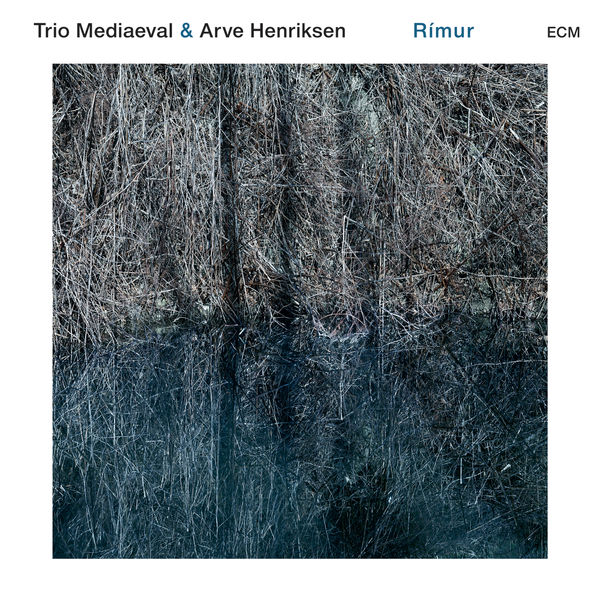

Home - Browse Torrents
ExtraTorrent.st is in compliance with copyrights
2025 ExtraTorrent.st