|
|
Latest Articles

New Movies








Foreign





|

Torrent Description
Getting Around Brown: Desegregation, Development, and the Columbus Public Schools
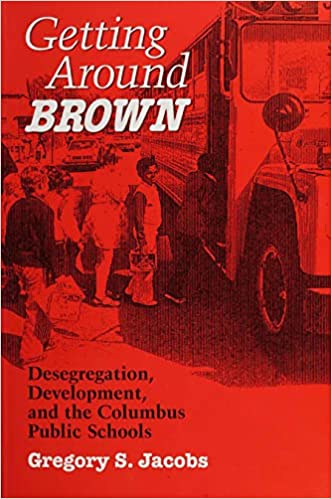 https://WebToolTip.com English | 312 pages | Ohio State University Press; 1st edition (March 1, 1998) | 0814207219 | PDF | 16.68 Mb Getting Around Brown is both the first history of school desegregation in Columbus, Ohio, and the first case study to explore the interplay of desegregation, business, and urban development in America. Drawing on a broad range of sources, including over sixty interviews, the book details the causes and consequences of Penick v. Columbus Board of Education (1977). Gregory S. Jacobs argues that school desegregation in Columbus failed to produce equal educational opportunity, not because it was inherently detrimental to learning, but because it was incompatible with urban development. As a consequence, the long-term health of the city school district was sacrificed to preserve the growth of the city itself. The resulting middle-class abandonment of urban education in Columbus produced an increasingly poor, African-American city school system and a powerful form of defensive activism within the overwhelmingly white suburban systems.
Related Torrents
|
||||||||||||||||||||||||||||||||||||||||||||||||||||


 English

Home - Browse Torrents
ExtraTorrent.st is in compliance with copyrights
2025 ExtraTorrent.st