|
|
Latest Articles

New Movies







Foreign








|

Torrent Description
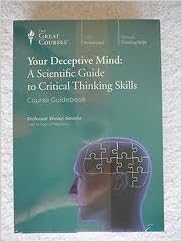 Category: Self-help Language: English Keywords: Deceptive Mind Written by Steven Novella Read by Steven Novella Format: MP3 a scientific guide to critical thinking skills What should you think? Who should you believe? Could you be deceiving yourself? These are questions that all critical thinkers of any age must constantly ask themselves. There is no more important skill in today’s world than being able to think about, understand, and act on information in a way that is both effective and responsible. Critical thinking transforms you from a passive member of society into an active participant in the ideas and issues of the day. It empowers you to better understand nearly every single aspect of everyday life, from health and nutrition to science and technology to philosophical and spiritual belief systems. What’s more: At no point in human history have we had access to so much information, with such relative ease, as we do in the 21st century. Information is literally everywhere around you; in newspapers and magazines, on the radio and television, and across the Internet. But as the amount of information out there increases, so too does the amount of misinformation. So it’s more important than ever before to become a better critical thinker—someone who can analyze and construct arguments and arrive at more sound, more informed opinions. And the key to success lies in understanding the neuroscience behind how our thinking works—and goes wrong; mastering the fundamental skills behind logic, reasoning, and argumentation; avoiding common pitfalls and errors in thinking, such as logical fallacies and biases; and knowing how to distinguish good science from pseudoscience. All this and more you can find in the 24 rewarding lectures of Your Deceptive Mind: A Scientific Guide to Critical Thinking Skills. Dr. Steven Novella of the Yale School of Medicine—an academic neurologist, award-winning instructor, and public educator—equips you with the knowledge and techniques you need to become a savvier, sharper critical thinker in your professional and personal life. By immersing yourself in the science of cognitive biases and critical thinking, and by learning how to think about thinking (a practice known as metacognition), you’ll gain concrete lessons for doing so more critically, more intelligently, and more successfully than ever before.
Related Torrents
|
||||||||||||||||||||||||||||||||||||||||||||||||||||



 English
Home - Browse Torrents
ExtraTorrent.st is in compliance with copyrights
2025 ExtraTorrent.st